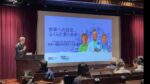
Last week I had the chance to support a dialogue between The University of Tokyo and the Global Partnership for Education on how Japan can strengthen its role in financing education globally. Throughout the dialogue, the preferred term was not ‘aid’ but ‘investment’ in education.
Representatives from MOFA, MEXT, JICA, the Ambassadors of Italy and Nigeria to Japan, as well as NPOs and private companies discussed how public–private partnerships with universities can contribute to more impactful investment in education.
A theme that stayed with me was the idea of promoting the ‘essence of Japanese education’. Some private actors frame this as an attractive export to donor countries, while government representatives were noticeably careful about the risk of such influence. Yet this also raises uncomfortable questions about the coloniality of education. Whose educational model is being promoted, and on whose terms? Who owns the money often shapes priorities, narratives, and indicators of success.
For Japan, thinking seriously about these questions is not a criticism of its education system. It is a step towards more reflexive engagement with its geopolitical position and interests, as well as the influence it holds as an ‘investor’.
This is not to say Japan has not already taken such steps, but looking ahead I hope Japan will continue and further deepen its efforts to listen to partner countries, share power in decision-making, and treat education not as something to export but as something to build together.